
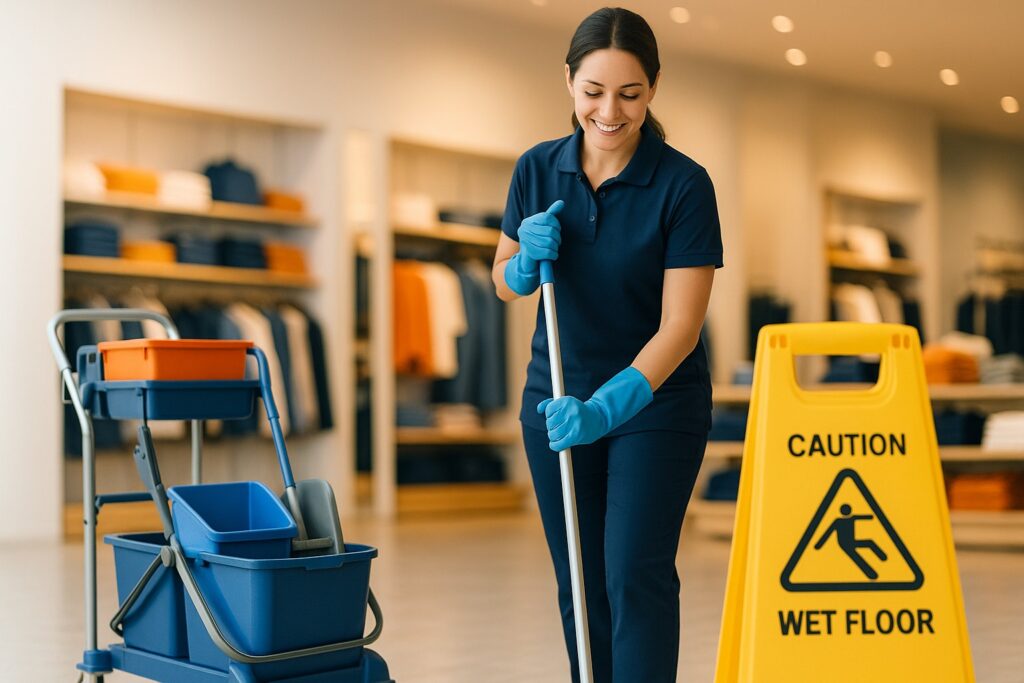
Retail cleaning services are no longer a back-of-house function—it is a strategic driver of employee morale, customer experience, compliance, and operational efficiency. In today’s competitive retail environment, clean, safe, and well-maintained stores influence how customers perceive a brand and how employees perform their roles. For senior retail leaders, effective cleaning programs are essential to risk management, productivity, and long-term profitability.
This guide explores how structured retail cleaning strategies improve staff morale, ensure regulatory compliance, and streamline daily operations. It also outlines proven frameworks, technologies, and actionable steps retailers can implement to elevate cleaning standards across single stores or multi-site portfolios. Pro Cleaning Woking will provide advice on Woking’s commercial cleaning and office cleaning.
Clean, orderly retail environments directly influence employee morale. When staff work in well-maintained spaces, they are more likely to feel valued, motivated, and engaged. Retail cleaning that is consistent and visible reinforces company standards and encourages employees to uphold professionalism across all aspects of their role.
Poor cleanliness, by contrast, contributes to frustration, disengagement, and higher absenteeism. A strong retail cleaning program supports productivity by reducing distractions, improving comfort, and fostering a sense of ownership among staff. So get the best retail cleaning company near you.
Clear cleaning procedures reduce confusion and operational friction. Standardised checklists, zone responsibilities, and training programs ensure everyone understands what is expected and when. This clarity supports smoother daily operations, reduces workplace accidents, and creates a culture of accountability.
For large retail teams, documented retail cleaning procedures are essential to consistency, particularly during shift changes, peak periods, or staff turnover.
Retailers operate under increasing scrutiny from health and safety authorities, particularly in high-traffic locations, food retail, and stores with public restrooms. Inadequate retail cleaning can result in fines, reputational damage, or temporary store closures. So get a smart and professional cleaning services company.
Effective cleaning programs incorporate routine disinfection, documented procedures, and compliance audits. Using approved and eco-certified products helps retailers meet regulatory standards while reducing health risks to staff and customers.
Beyond compliance, retail cleaning plays a critical role in brand perception. Customers associate cleanliness with professionalism, trust, and quality. Stores that visibly prioritise hygiene benefit from stronger customer confidence and loyalty—especially in a post-pandemic retail landscape.
Retail spaces have varied cleaning needs depending on function and foot traffic. A zone-based retail cleaning strategy assigns specific protocols to areas such as:
• Entrances and checkout zones
• Sales floors and aisles
• Restrooms and fitting rooms
• Stockrooms and staff areas
High-touch and high-traffic zones require frequent disinfection, while back-of-house areas may need deeper but less frequent cleaning. Assigning responsibility for each zone improves accountability and ensures no areas are overlooked. Colour-coded tools and signage reduce cross-contamination, particularly in food or hygiene-sensitive environments.
Successful retail cleaning depends on structured scheduling.
Daily tasks typically include surface disinfection, floor cleaning, waste removal, and restroom sanitation.
Weekly routines address dusting, glass cleaning, vents, and fixtures.
Periodic deep cleans focus on hidden or hard-to-reach areas such as behind shelving, under counters, and HVAC components.
Digital checklists and facility management software help track completion, identify trends, and adjust schedules during seasonal peaks or promotional events.
The effectiveness of retail cleaning is heavily influenced by product and equipment choice. Eco-friendly, non-toxic cleaners are increasingly preferred for compliance and customer perception. High-efficiency tools such as microfiber systems, HEPA-filtered vacuums, and automated floor scrubbers improve results while reducing labour hours.
Specialist retailers—such as electronics or apparel stores—benefit from anti-static tools and gentle cleaning agents that protect merchandise while maintaining hygiene standards.
Retailers must choose between internal cleaning teams and outsourced providers. In-house teams offer greater control and cultural alignment, while outsourcing provides scalability, specialist expertise, and predictable costs.
Many retailers adopt a hybrid model—using in-house staff for daytime maintenance and outsourcing deep or after-hours retail cleaning. Senior leaders should evaluate cost, quality assurance, and flexibility when selecting the optimal approach.
Regardless of structure, staff quality is critical. Clear job descriptions, proper vetting, and structured onboarding set expectations from day one. Training should cover cleaning protocols, health and safety, equipment use, and customer interaction.
Ongoing training ensures teams remain compliant with regulations and up to date with best practices. Recognition programs and performance incentives improve retention, consistency, and morale in competitive labour markets.
A national fashion retailer struggled with customer complaints regarding fitting room cleanliness. By introducing a dedicated retail cleaning team with targeted training and accountability checks, the store improved customer satisfaction by 18% within three months. Sales in the affected department increased by 10%, demonstrating the commercial impact of focused cleaning investment.
High-touch surfaces such as door handles, payment terminals, and baskets require frequent sanitisation. Electrostatic spraying and hospital-grade disinfectants allow for fast, thorough coverage with minimal disruption. Documenting frequency and methods supports compliance and inspection readiness.
Sustainability is now a competitive differentiator. Green retail cleaning programs reduce environmental impact through biodegradable products, reduced water usage, and energy-efficient equipment. Certifications such as Green Seal or LEED enhance credibility and customer trust.
IoT-enabled dispensers, occupancy sensors, and automated floor machines are transforming retail cleaning operations. These technologies adjust cleaning frequency based on real-time foot traffic, optimise resource use, and provide performance data via dashboards.
Early adoption delivers cost savings, improves safety, and positions retailers as operational leaders.
Sales events and holidays require proactive planning. Increased staffing, adjusted schedules, and pre-positioned supplies help maintain standards during peak demand. Visible cleaning activity reassures customers and reinforces brand professionalism.
Spills, accidents, or public health incidents require immediate action. Clear protocols, trained response teams, PPE availability, and documentation reduce liability and disruption. Transparent communication restores confidence quickly.
A retail pharmacy faced a norovirus outbreak and implemented emergency retail cleaning protocols, including temporary closure, deep disinfection, air circulation upgrades, and staff health monitoring. The structured response minimised downtime and preserved customer trust.
Regular audits identify gaps and improvement opportunities. Digital tools streamline reporting and enable real-time corrective action. Multi-site retailers benefit from benchmarking results across locations.
Customer reviews and mystery shopping programs reveal how cleanliness is perceived. Combining qualitative feedback with audit data supports targeted improvements and reinforces accountability.
Key performance indicators such as task completion rates, audit scores, response times, and customer satisfaction provide measurable insight. Dashboards and reports support informed decision-making and transparency.
• Assess your current retail cleaning program
• Implement zone-based and scheduled protocols
• Invest in training and staff recognition
• Adopt smart technologies and sustainable products
• Prepare for seasonal and emergency scenarios
• Audit, benchmark, and report consistently
• Communicate cleaning standards to customers
Retail cleaning is a strategic asset that directly impacts safety, brand perception, employee engagement, and operational performance. By adopting structured systems, advanced technologies, and continuous improvement practices, retailers can create environments that support both people and profit. Soon, more advice on office cleaning and other commercial cleaning.
In an industry where every detail shapes perception, excellence in retail cleaning is not optional—it is a leadership decision. Start by evaluating your current approach and applying the strategies outlined in this guide to gain a lasting competitive advantage.
Partners:
Pro Cars Woking
Woking-Taxi
Taxi Woking Airport