
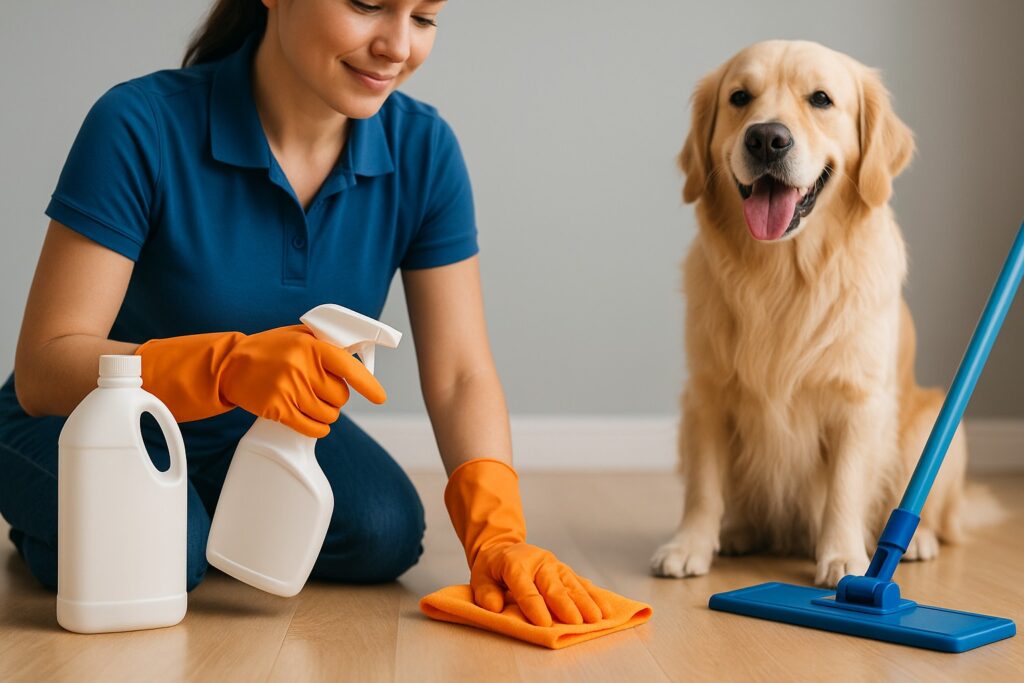
Choosing the right floor cleaning products is critical in environments where pets are present. Floors are among the most frequently contacted surfaces for animals, making them a primary pathway for chemical exposure. Many conventional cleaners contain ingredients that can be harmful to pets, even when used as directed.
For senior professionals in facilities management, veterinary services, property management, or home care, selecting pet safe cleaning products for floors is not simply a lifestyle choice—it is a risk management, compliance, and welfare decision. This guide provides a comprehensive, evidence-based overview of pet safe floor cleaners, helping you evaluate products based on safety, effectiveness, and regulatory alignment. Pro Cleaning Woking provides domestic cleaning, but also commercial cleaning. We focus on Woking domestic cleaning, so we come across many pets in houses and homes.
Pets spend a significant amount of time in direct contact with flooring surfaces. Walking, lying down, grooming, and licking paws after contact all increase the risk of exposure to chemical residues left behind by cleaning products.
Many traditional floor cleaners contain substances such as ammonia, chlorine, phenols, or synthetic fragrances. These compounds have been linked to respiratory irritation, skin reactions, gastrointestinal distress, and toxicity in animals. Veterinary organisations and regulatory bodies consistently warn against the use of harsh chemicals in pet environments.
Using pet safe cleaning products for floors reduces health risks, supports animal welfare, and limits liability for businesses operating in pet-friendly or animal-care environments. It also contributes to improved indoor air quality and safer conditions for humans.
Understanding regulatory and certification frameworks is essential when selecting pet safe cleaning products for floors. Several recognised bodies provide guidance and third-party validation:
• EPA Safer Choice – identifies products with safer chemical ingredients
• Green Seal – certifies environmentally responsible and low-toxicity products
• Leaping Bunny – verifies cruelty-free manufacturing
• FDA and EPA guidelines – regulate chemical safety and labelling standards
Facilities such as veterinary clinics, animal shelters, pet-friendly offices, and residential complexes often require adherence to internal chemical safety policies. Selecting certified pet safe cleaning products for floors demonstrates compliance, transparency, and commitment to best practices.
Different environments and flooring materials require different cleaning approaches. Below are the most effective and widely recommended categories of pet safe cleaning products for floors.
Plant-based cleaners rely on naturally derived surfactants sourced from materials such as coconut oil, corn, or sugar beet. These products avoid harsh solvents, synthetic dyes, and artificial fragrances.
They are well-suited for sealed hardwood, laminate, vinyl, and tile floors. Plant-based cleaners clean effectively while leaving minimal residue, reducing the risk of paw or skin irritation.
When selecting plant-based options, prioritise brands that provide full ingredient transparency and third-party safety certifications.
Enzyme cleaners are among the most effective pet safe cleaning products for floors, particularly in environments prone to pet accidents. These products use biological enzymes to break down organic matter such as urine, faeces, and vomit at a molecular level.
Unlike fragrance-based cleaners, enzyme solutions neutralise odours rather than masking them. They are ideal for tile, sealed concrete, laminate, and other non-porous flooring surfaces commonly found in pet facilities.
Correct application and dwell time are essential to ensure effectiveness and prevent residue buildup.
Hypoallergenic cleaners are designed for environments with heightened sensitivity concerns. These products exclude common irritants such as sulfates, parabens, artificial fragrances, and dyes.
They are particularly appropriate in veterinary clinics, animal shelters, multi-pet households, and facilities housing elderly or immunocompromised animals. Hypoallergenic pet safe cleaning products for floors support respiratory health and reduce the risk of allergic reactions in both pets and humans.
Some professionals and homeowners choose simple DIY solutions, such as diluted vinegar or castile soap mixtures. When formulated correctly, these can be pet safe for routine maintenance.
However, caution is required. Certain ingredients commonly used in DIY cleaners—especially essential oils like tea tree, eucalyptus, citrus, or peppermint—can be toxic to pets. DIY solutions should be limited to low-risk applications and tested on small areas before use.
Reputable manufacturers clearly disclose all ingredients. Avoid products that use vague terms such as “fragrance” or “proprietary blend,” as these can conceal potentially harmful chemicals.
Ingredient transparency simplifies compliance audits, supports risk assessment, and builds trust in professional environments.
Pet safe cleaning products for floors must still deliver strong cleaning performance. Evaluate products based on:
• Independent testing or certifications
• Performance data from similar environments
• Compatibility with your flooring materials
Products should effectively remove dirt, pathogens, and organic residue while maintaining surface integrity.
Product choice alone is not enough. Safe cleaning practices should include:
• Correct dilution and application
• Secure storage of cleaning agents
• Adequate drying time before pet access
• Staff or household training
Maintaining Safety Data Sheets (SDS/MSDS) is recommended for professional settings.
A large veterinary hospital replaced conventional cleaners with certified, plant-based pet safe cleaning products for floors. Within three months, reported respiratory and skin irritation among animals and staff decreased by 45%. Slip resistance also improved due to reduced residue.
A pet daycare centre transitioned to enzyme-based floor cleaners to address persistent odour and staining. Odour complaints dropped by 60%, and deep cleaning frequency was reduced, lowering operational costs.
A household with multiple dogs and cats adopted a combination of hypoallergenic and enzyme-based cleaners. Over six months, allergy flare-ups reduced significantly, and floor cleanliness improved without compromising pet safety.
High-traffic areas should be cleaned daily, with deeper cleaning scheduled weekly. Rotating compatible pet safe cleaning products for floors helps maintain hygiene without chemical buildup.
Education is essential. Train staff, residents, or family members on correct usage, dilution, and safety procedures. Clear guidelines prevent misuse and accidental exposure.
Regularly review cleaning outcomes, gather feedback, and reassess product performance. Continuous improvement ensures alignment with evolving best practices and regulatory guidance.
Professionals frequently recommend the following categories and product types based on safety and performance:
• Plant-based multi-surface floor cleaners
• Certified enzyme-based stain and odour eliminators
• Hypoallergenic, fragrance-free floor cleaners
• EPA Safer Choice or Green Seal certified products
Always conduct spot testing and verify compatibility with your specific flooring materials.
To implement safe and effective floor cleaning in pet environments:
• Audit existing cleaning products for pet safety risks
• Replace high-risk chemicals with certified pet safe alternatives
• Train all users on correct application and storage
• Maintain consistent cleaning schedules
• Monitor results and adjust protocols as needed
These steps support animal welfare, regulatory compliance, and long-term facility hygiene.
Selecting pet safe cleaning products for floors is a critical responsibility in both professional and residential environments. The right products protect animal health, reduce liability, and deliver effective cleanliness without unnecessary chemical exposure.
By prioritising ingredient transparency, regulatory certifications, and proven performance, senior professionals and pet owners alike can create safer, healthier spaces. Use the insights and strategies outlined in this guide to upgrade your cleaning protocols and confidently support the wellbeing of pets and people.
Ready to improve your floor care standards? Transition to certified pet safe cleaning products for floors and set a new benchmark for safety, hygiene, and responsibility today. Lear alo about our carpet cleaning, deep cleaning and end of tenancy cleaning.