
How often should you deep clean your home? For most households the answer is about once a year, on top of regular weekly or fortnightly cleaning. Some homes need it more often, and some moments call for an extra one whatever the calendar says. This guide sets out what a deep clean adds, which situations shorten the interval, and how to spread the work so it never feels like a huge job.
What a deep clean adds to regular cleaning
Regular cleaning keeps the visible surfaces in order: dusting, vacuuming, mopping, the kitchen and the bathroom. A deep clean goes to the places a routine visit does not reach: inside appliances and cupboards, limescale and grout, skirting boards and door frames, light fittings, and behind and under furniture. One keeps the house tidy week to week; the other resets it.
The two work together. Regular visits stop dirt building up on the surfaces you use; a periodic deep clean deals with what builds up anyway in the places nobody looks. The full list of what is covered is on our deep cleaning service page.
When once a year is enough, and when it is not
| Your home | A sensible interval |
|---|---|
| A typical home with regular cleaning | About once a year |
| Pets that shed or come in muddy | Every six months |
| Young children at home | Every six months |
| Someone with allergies | Every six months |
| A busy shared house | Every six months, or more often |
| A rented home between tenancies | At every change of tenant |
These are general guides, not rules. If dust and grime come back quickly after a clean, or you can see build-up on grout, oven doors or skirting boards, the interval is too long. Our post on the signs your home needs a deep clean lists what to look for.
Keeping on top of grime has a practical payoff too: tiles, grout, carpets and appliances that are cleaned properly every so often last longer and look better for it.

Extra deep cleans outside the routine
Some moments call for a deep clean whatever the date of the last one:
- Moving out: landlords and letting agents expect the property back in the condition it was let in, which usually means a deep clean. See end of tenancy cleaning.
- Moving in: start with a clean slate before your furniture goes in.
- After building work: dust from sanding, plastering and cutting settles everywhere, including inside cupboards.
- Before selling: a deep-cleaned home photographs and views better.
- After a long empty spell: a house closed up for months gathers dust and stale air.
- Spring: many people simply like to reset the house as the days get longer.
Spreading the work through the year
You do not have to do everything at once. If a full deep clean feels like too much, spread the deeper jobs across the year instead of doing them all in one go. Our deep cleaning checklist breaks the jobs down room by room so you can tick them off.
What about carpets?
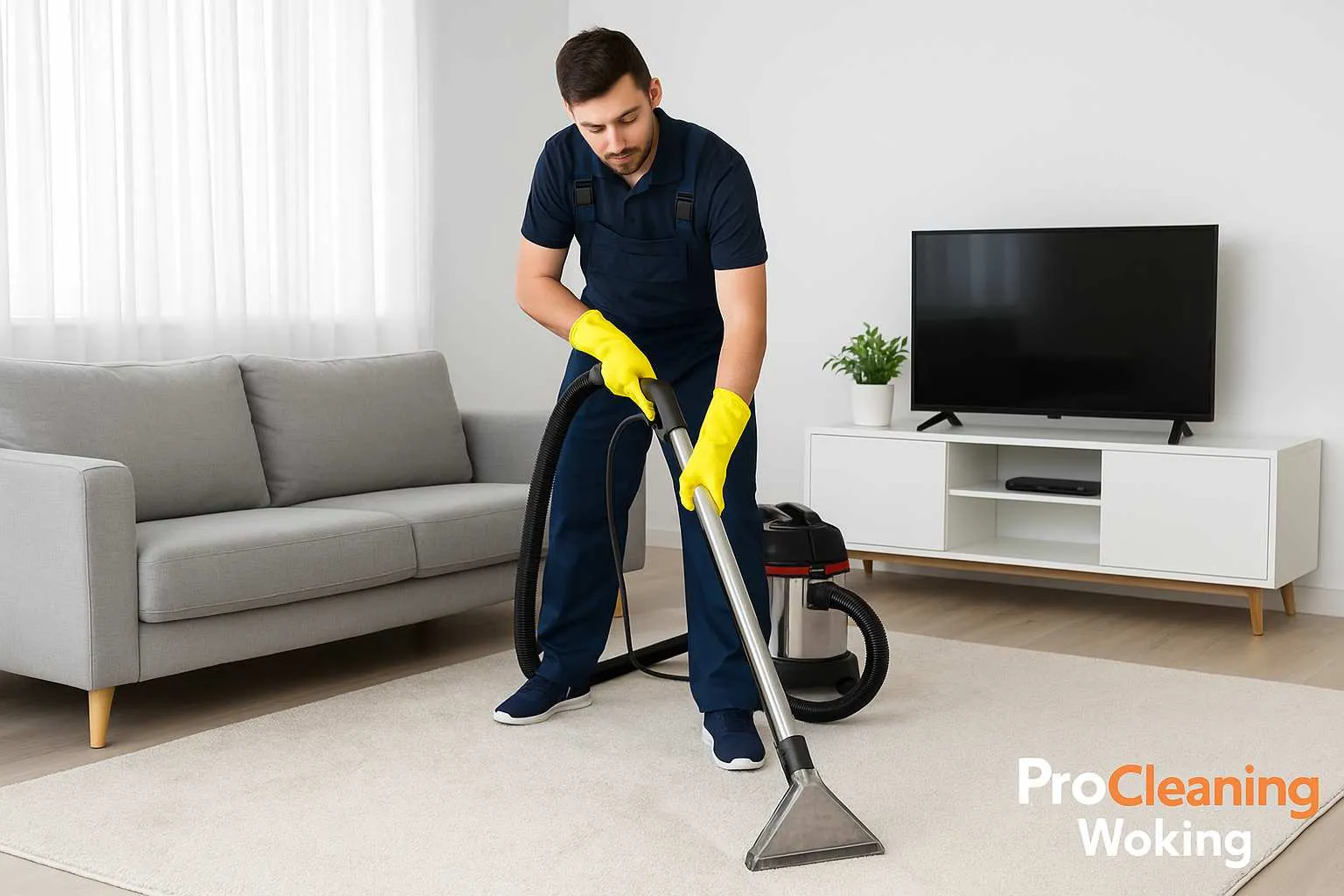
Carpets follow their own timetable, which depends on how much traffic they get, and many people book carpet cleaning alongside a deep clean. For the details, read how often carpets need a professional clean.
Two common questions
Is one deep clean a year enough? For most households with regular domestic cleaning, yes. Homes with pets, young children or someone with allergies often find twice a year works better.
Can regular cleaning replace a deep clean? Not entirely. Regular cleaning slows the build-up but does not reach inside appliances, behind furniture or into grout. A deep clean every so often covers what the weekly routine leaves behind.
To book a deep clean or ask how often your home needs one, call 01483 773531 or send us a message.