
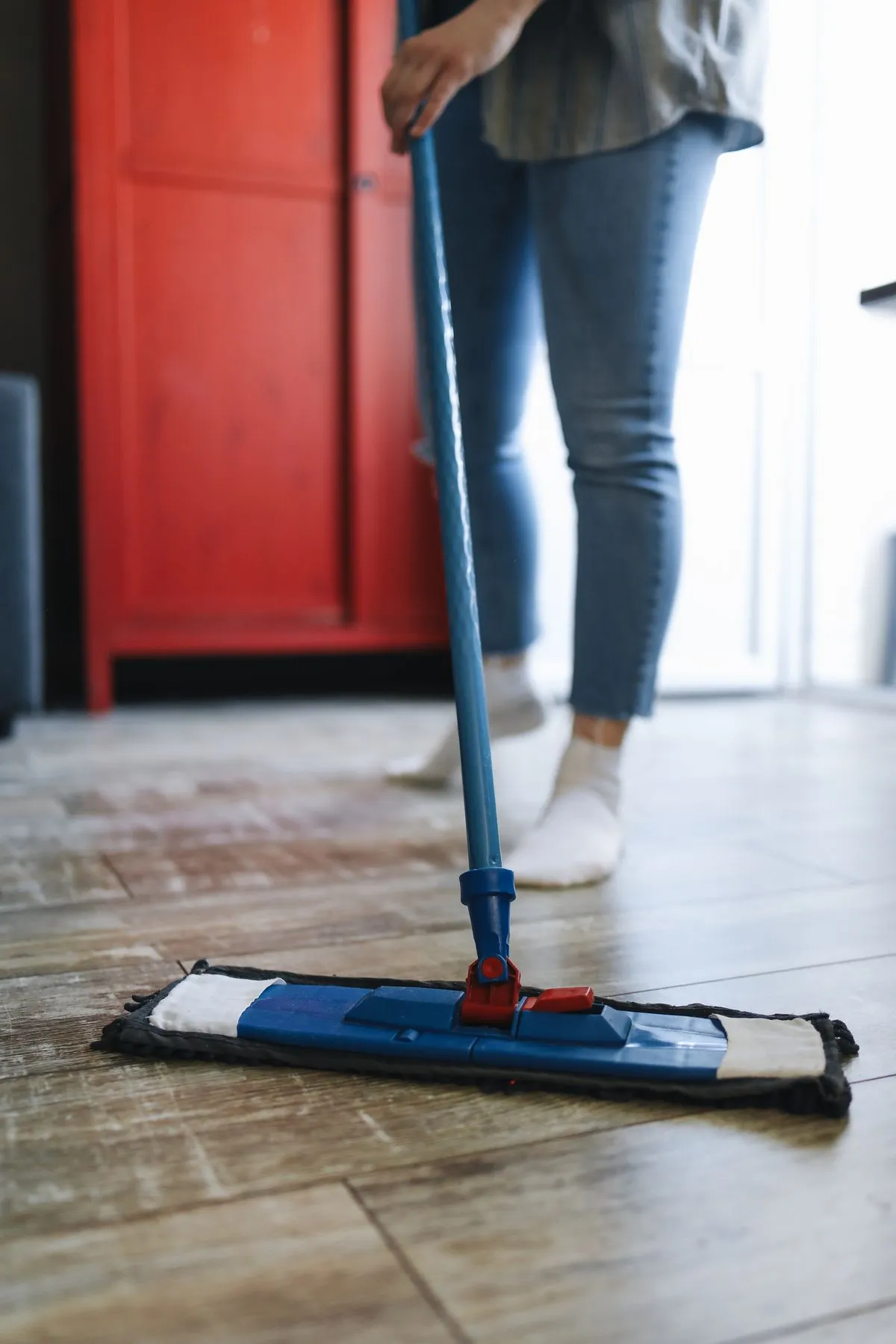
People often ask about the health benefits of regular cleaning, and the honest answer starts with a caveat: we are cleaners, not doctors, so nothing here is medical advice and nothing is promised about anyone’s health. What we can describe is what you will notice in a home that is cleaned on a routine: less dust, fewer damp patches, and kitchens and bathrooms that stay in good order.
If you are thinking of handing some of this over, our regular domestic cleaning page explains what each visit covers.
Less dust on surfaces and floors
Dust settles on every flat surface, gathers along skirting boards and collects in carpets and rugs, along with hair from pets and people. Left for a month, it becomes a grey film you can draw a finger through. Vacuumed and damp-dusted every week or two, it never gets that far.
Damp dusting is worth the small extra effort. A slightly damp microfibre cloth picks the dust up, whereas a dry duster tends to push it into the air to settle again somewhere else. Work from the top of a room down, so anything that falls lands on a floor you are about to vacuum.
Damp and condensation caught early
Condensation on windows, tiles and bathroom ceilings is a normal part of a British winter. The trouble starts when it is left to sit, because that is when black spots appear on window frames, sealant and grout.
A few habits keep it in check:
- Wipe condensation off windows and sills each morning in the colder months.
- Open a window or run the extractor fan while showering, cooking or drying washing indoors, and for a while afterwards.
- Pull furniture a little away from outside walls so air can move behind it.
- Clean small marks on sealant and grout as soon as they show, before they spread.
Regular cleaning means somebody is looking at these corners every week or two, so small problems are spotted while they are still small. If marks keep returning or cover a large area, that points to a damp problem in the building itself, which is a job for your landlord or a damp specialist, not a cleaner.
Cleaner kitchen and bathroom surfaces
The kitchen is where food is prepared, so it is the room where keeping on top of things matters most. Wipe worktops before and after preparing food, keep separate cloths for the kitchen and the bathroom, and wash or swap cloths and tea towels often rather than using them until they smell. Chopping boards go in hot soapy water after every use. Check the fridge once a week and clear out anything past its date.
In the bathroom, the surfaces everyone touches are the ones to keep on top of: taps, the toilet flush and seat, door handles and light switches. A regular clean covers these properly, and a quick wipe in between keeps them that way. Our kitchen cleaning tips go into the kitchen side in more detail.
A tidier home
A cleaned house is also a tidier one, and that has plain practical benefits. Clear floors and stairs mean fewer things to trip over, and you can find your keys in the morning.
How often to clean
How often depends on the size of your household, whether there are children or pets, and how much you do yourself in between. Our guide on how often to book a cleaner compares weekly and fortnightly visits, and our post on keeping your home fresh between visits covers the small habits that fill the gap. If the house needs a thorough reset first, a one-off deep clean is a good starting point.
Regular help with the cleaning
If you would like this kind of routine without doing it all yourself, call 01483 773531 and tell us how big the house is and how often you are thinking of. Our cleaners are fully insured and use eco-friendly cleaning products, and regular customers have the same cleaner for every visit where possible. You can also write to us through the contact page.