
Persian and other hand-knotted rugs are made from natural fibres, usually wool and sometimes silk, and coloured with dyes that can react badly to water, heat and strong chemicals. That makes them far more delicate than a fitted carpet. This guide explains how to care for a Persian rug from day to day, what to do when something is spilt on it, and what to ask before you hand it over to Persian rug cleaning services.
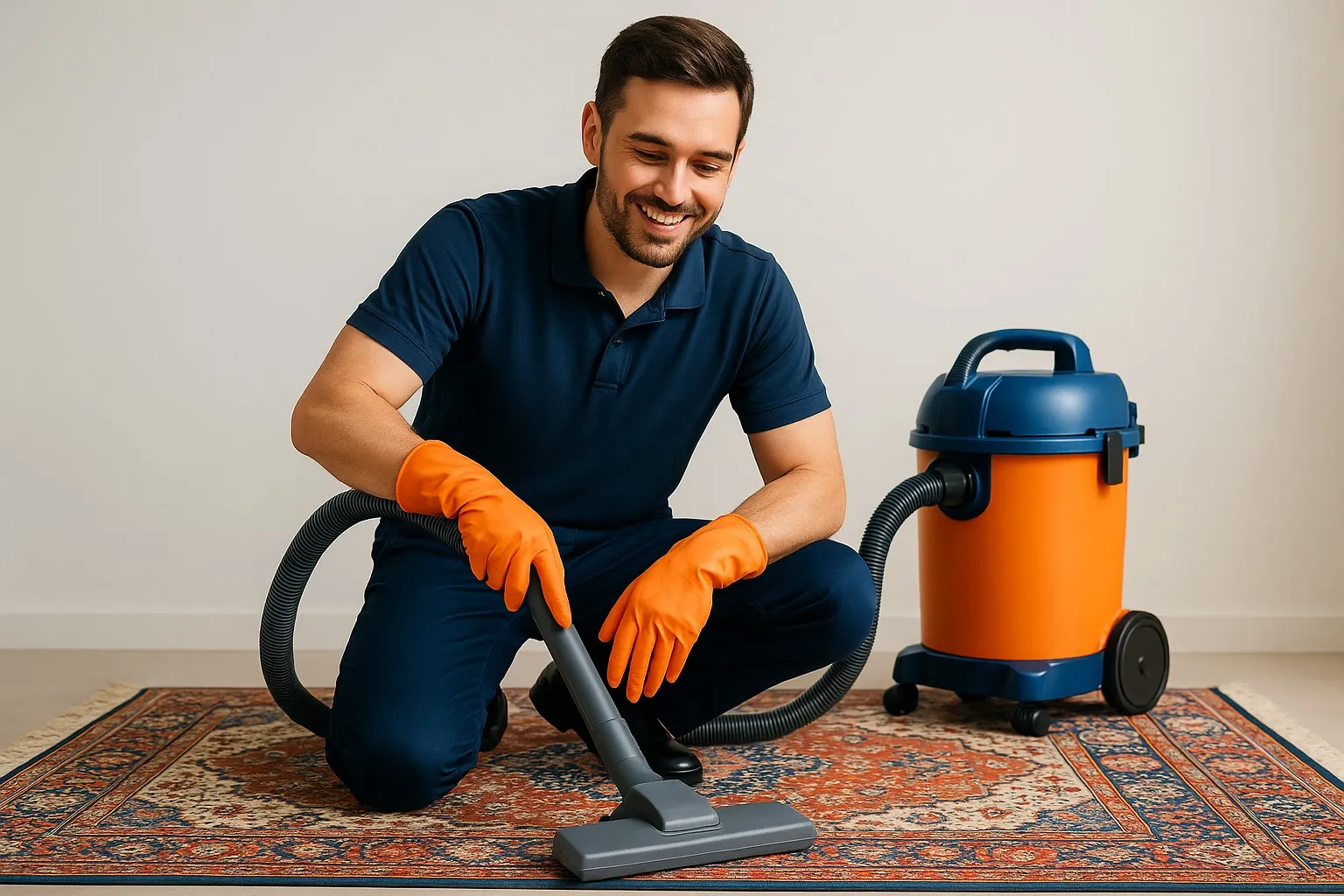
If you are thinking of having a rug cleaned, tell us what it is made of through our contact page and we will tell you whether we can clean it. You can also read about our carpet cleaning. The advice below is what we would give anyone who owns a hand-knotted rug.
Why a hand-knotted rug needs gentler handling
A hand-knotted rug can take months to make. Its depth of colour and its durability come from dense knotting, natural fibres and layers of dye, and those same qualities make it sensitive. Harsh detergents, too much water or heavy scrubbing can cause dye bleeding, shrinkage, a distorted shape or patches of lost colour. No two rugs behave quite the same: age, pile height, the dyes used and how the rug was made all change how it should be treated.
Over the years, a Persian rug is likely to collect:
- grit and dust deep in the pile, which grind at the fibres
- food and drink spills
- pet stains and smells
- sun fading and uneven wear where people walk most
- moth damage, often hidden under furniture
- mould or mildew if it has been kept somewhere damp
Everyday care
- Vacuum gently. Turn off the rotating brush or use a hard floor head, and work in the direction of the pile. Keep the nozzle away from the fringe, which can catch and tear.
- Clean the back now and then. Turn the rug over a few times a year and vacuum the underside. Grit works its way through and wears the knots from below.
- Rotate it. Turning the rug every few months spreads both the foot traffic and the sunlight more evenly.
- Use a rug pad. A good underlay stops the rug sliding, cushions the knots and lets air move underneath.
- Watch the light and the damp. Keep it out of strong direct sun where you can, and away from rooms that stay humid.
- Store it properly. Clean it before it goes away, roll it rather than fold it, and keep it somewhere dry where you can check for moths from time to time.
- Keep the paperwork. Receipts, photographs and any valuation are useful for insurance.
When something is spilt
Act straight away. Lift off anything solid, then blot with a clean white cloth, pressing rather than rubbing. Dab on a little cold water and blot again until the cloth comes away clean. Do not reach for a household carpet shampoo, and do not soak the area: water that gets into the foundation can make the dyes run and is slow to dry.
If you want to try any product, test it first on a corner of the back of the rug, never on the front. Dry the patch flat with plenty of air around it, and keep it away from radiators and hair dryers. For pet accidents, blot and rinse lightly in the same way. If the smell is still there once the rug is dry, it has probably gone deeper than you can reach. Our guide to pet safe cleaning products for floors covers the hard floor around it.
Why hired carpet machines are a risk
Hired carpet cleaning machines and household detergents are made for fitted synthetic carpet, not for wool knotted by hand. They put down a lot of water, which can shrink the rug, encourage mould and push the dyes into each other. Detergent left in the pile attracts dirt and can weaken the fibres. Strong suction heads pull at the knots and the fringe. High heat combined with moisture brings the same risk of colours running, so a home steam cleaner is not a safe shortcut either.
How often it needs a professional clean
For most Persian rugs in normal household use, a professional clean every 12 to 18 months is a sensible guide. A rug in a busy hallway, or in a home with pets, may need it sooner. Signs that it is due:
- the colours look flat or greyish
- dust or grit falls out when you lift a corner and tap the back
- there is a smell that does not fade after airing
- there are sticky or stiff patches in the pile
- it has had a pet accident or a leak that you could not fully deal with
What to ask a rug cleaner before you book
Before anyone takes on a valuable rug, ask:
- What experience do you have with Persian and other hand-knotted rugs?
- How do you check whether the dyes are stable before cleaning?
- Which products and which method do you use on wool, and on silk?
- Will you clean it at my home or take it away, and how will it be dried?
- Are you insured, and what happens if something goes wrong?
- Would you clean a very old or fragile rug, or would you recommend a specialist?
You can also ask whether the cleaner holds a qualification from a recognised industry body such as the IICRC or the WoolSafe Organisation. A careful clean usually starts with an inspection, then removes the dry soil before any washing, treats stains one by one and dries the rug slowly before the pile and fringe are groomed. For a wider checklist that also covers sofas and fitted carpets, see how to choose a carpet cleaner, and for fitted carpets at home, our tips on keeping carpets clean between professional cleans.
Getting your rug cleaned
When you call, tell us the size of the rug, what it is made of if you know, roughly how old it is and what marks are on it. A photo helps. We will tell you whether we can clean it and, if we can, give you a quote. You can see our cleaning prices for carpets before you get in touch.
Not sure how to clean your rug? Call 01483 773531 for advice, or use our contact page to send us the details.