
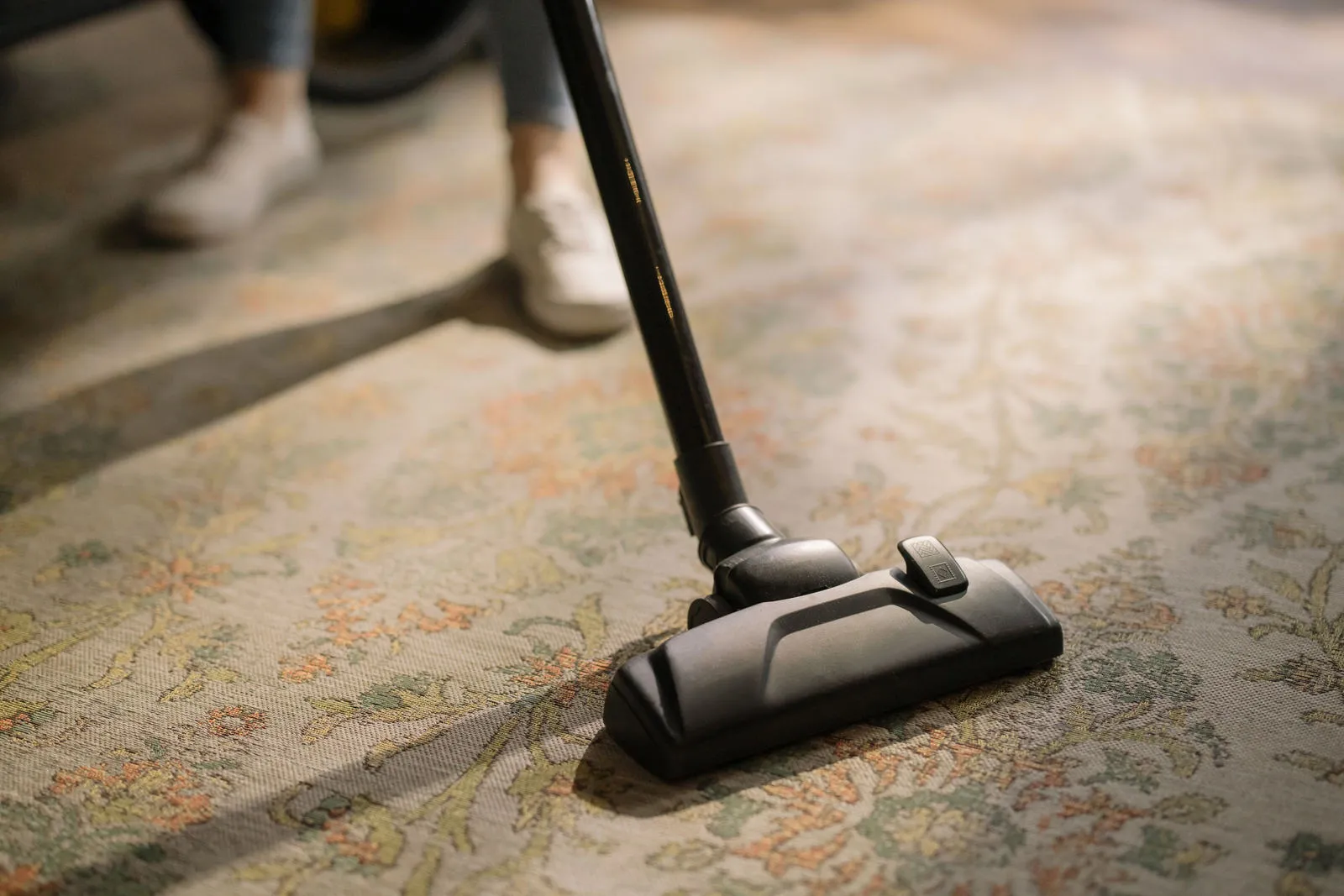
A professional carpet clean lifts the dirt that has worked its way down into the pile, but what you do in the months that follow decides how soon it comes back. This guide covers how to keep carpets clean between professional cleans: stopping grit at the door, vacuuming in a way that actually helps, dealing with spills and knowing when a mark needs more than a damp cloth.
What everyday vacuuming leaves behind
A vacuum picks up most of what sits on the surface. Some things settle deeper and stay there:
- grit and fine dust, which rub against the fibres every time someone walks over them and wear the pile down, most of all on stairs and in hallways
- food and drink residue, which leaves a slightly sticky film that holds on to fresh dirt
- pet hair and the smells that come with it
- oils and residues carried in on shoes and feet, which slowly dull the colour
Good habits will not remove all of this, but they slow the build-up, so each professional clean has less to deal with and the carpet looks fresh for longer.
Stop dirt at the front door
Most of the grit in a carpet walks in from outside. Two mats at each entrance catch far more than one: a coarse mat outside scrapes mud and gravel off soles, and an absorbent mat just inside picks up what is left, along with rainwater. Shake the mats out or vacuum them every few days, and wash the indoor one as its label allows. A mat that is already full simply passes the dirt along to the hall carpet.
A shoes-off rule does more than anything else you can do for free. A rack or a basket by the door makes it easy for the family to stick to, and a few pairs of spare slippers help when visitors come round. If a hallway or landing takes heavy traffic, a washable runner over the carpet takes the wear instead.
Vacuuming that actually makes a difference
How often you vacuum matters less than where. The hall, the stairs and the busiest part of the living room are worth doing two or three times a week. Bedrooms and spare rooms can usually go a week between passes.
On the busy areas, slow down. One quick pass leaves most of the grit behind; several slow, overlapping strokes in two directions lift far more of it. Use the crevice tool along the skirting boards now and then, where fluff collects.
Look after the machine as well. Empty the bin or change the bag before it is full, wash or replace the filters as the manufacturer says, and cut away hair wrapped around the brush roll. A vacuum with a clogged filter and a tangled brush will push dirt around rather than pick it up. Every so often, move the sofa and chairs a few centimetres so the same patches of carpet are not always flattened underneath.
Spills and marks: what to do in the first few minutes
Speed counts more than the product you use.
- Lift off anything solid with a spoon or a blunt knife.
- Blot the spill with a clean white cloth or kitchen paper, working from the outside in. Do not rub: rubbing spreads the mark and frays the pile.
- Dab on a little cold water and blot again. Hot water can set some marks, such as milk or blood.
- If you use a carpet stain remover, test it first on a hidden patch, inside a wardrobe or under a sofa, and follow the label.
- Do not soak the carpet. Too much water reaches the underlay and can leave a ring or a musty smell once it dries.
- Finish by pressing a dry towel on the spot, then leave a window open so it dries quickly.
Avoid bleach and strong household cleaners that are not made for carpet, and never scrub a wool carpet with a stiff brush.
When to stop and call a professional
Some marks are better left alone after the first blot. Stop and get advice when:
- a stain is still there after two or three gentle attempts, or is starting to spread
- a pet accident keeps smelling even though the surface looks clean
- a large spill or a leak has soaked right through
- you do not know what caused an old mark
- the rug is wool, silk or hand-made (see our guide to caring for a Persian rug)
The more cleaning products have already gone on a stain, the harder it can be to shift. If you would rather not risk it, book a carpet clean and tell us what caused the mark and what you have tried. Some old stains can only be lightened rather than removed, and it helps to know that before the work starts.
Stain protection after a clean
Some cleaners apply a stain protector to the carpet fibres after a clean. It is meant to help spills sit on the surface for a little longer instead of sinking straight in, which gives you time to blot them. It does not make a carpet stain-proof, so the steps above still apply. Ask whether a stain protector suits your carpet and whether it costs extra.
How often to book a professional clean
As a rough guide, a busy home with children or pets benefits from a professional carpet clean every 6 to 12 months, and a quieter home with a shoes-off rule about once a year. Our post on how often carpets need a professional clean goes into more detail.
Landlords and tenants
If you are moving out of a rented home, check what the tenancy agreement says about carpets. Carpet cleaning is not part of our standard end of tenancy cleaning, but you can add it as an extra, and we can give you an invoice for your records.
Need a hand with a stubborn mark?
If a stain will not shift, or the carpets are due a proper clean, call 01483 773531 for advice and a quote, or send us a message through our contact page. You can also check our carpet cleaning prices before you get in touch.